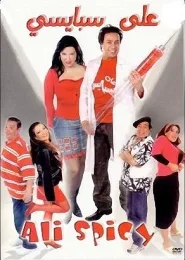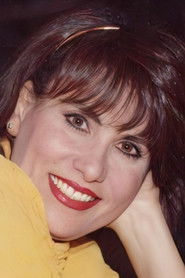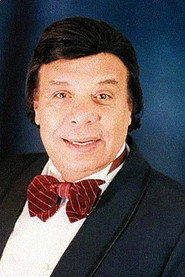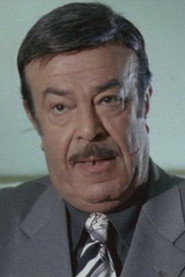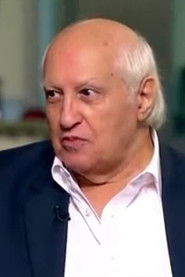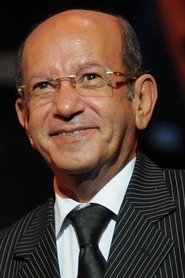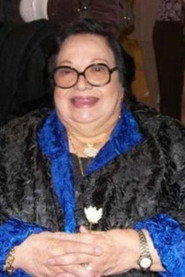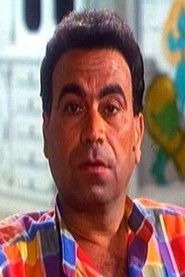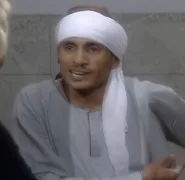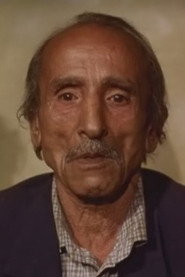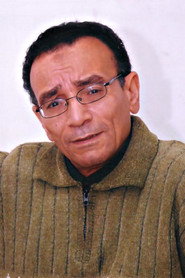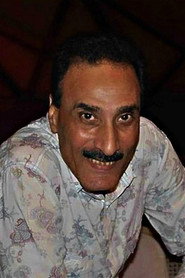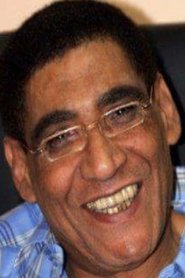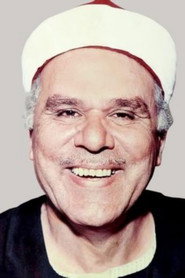

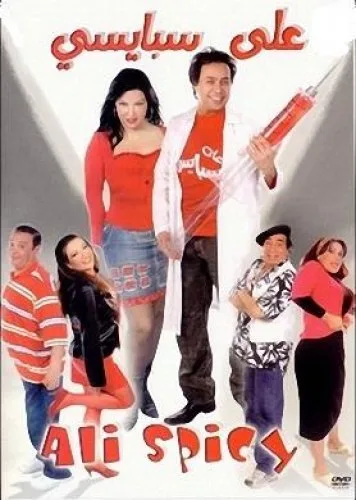
Ali (Hakim) enrolled in medical school upon the instructions of his father, El-Hajj Abou El-Ela (Gamal Ismail), to fulfill the wish of his late mother, who died due to the treating physician's lack of medical knowledge, with the intention that he would earn his degree and return to the village to treat the poor free of charge. However, Ali was passionate about music and singing, spending 12 years at the faculty without obtaining his bachelor's degree, while leading his father to believe he had graduated and was preparing a master's thesis. Ali was very close to the hospital's patients, treating them with the power of suggestion and encouraging optimism by playing music and singing for them. His method succeeded, and the hospital was cleared of chronic patients, sparking the jealousy of the hospital director (Lotfy Labeeb). After his educational allowance ceased following his fake graduation, he was forced to work at a cabaret as an interlude filler singer. Ali shared an apartment with his bohemian uncle Mondi (Salah Abdallah), who claimed to be working with the Arab Music Ensemble. Ali used to buy groceries on credit from grocer Sho'lan Belal (Abdullah Meshref), a writer of vulgar songs, as well as from grocer Enaba Fadl (Soad Nasr), who inherited the grocery store from her husband after nagging him to death and also composed songs. Ali had to listen to them both, despite their complete lack of musical or poetic talent. Ali was also in love with his colleague Ghada (Inas El-Naggar), and they promised to marry. When time dragged on due to Ali's repeated failures, she told him that a suitor had proposed to her, asking him to meet her father, ask for her hand, and be honest about his situation so her father could help him. Ali plucked up the courage and, accompanied by his uncle Mondi, met Ghada's father (Mohamed Abdel Haleem), only to be rejected and turned out, and Ghada became engaged. Ali did not let the heartbreak distract him from his lifelong dream of singing; he wrote and composed songs, searching for a producer to listen to his voice and support him. His chance came when cassette tape producer Karem Hamdy (Wahid Seif) visited the cabaret, accompanied by singer Gasser (Khaled Mahmoud). They were at odds because Gasser showed ingratitude toward Karem, who had rescued him from poverty and obscurity and made him a star, while Gasser was now demanding double pay. With them, trying to mediate, was arts journalist Salama El-Deeb (Ahmed Seyam). To allow Ali to sing freely before the producer, he asked his uncle Mondi—who had coincidentally arrived at the cabaret with his companion Iran (Entisar)—to delay singer Sameh Yosri, who was on his way to perform. Ali sang one of Gasser's songs, captivating the audience. This sparked Gasser's jealousy, while Karem saw in Ali the singer who could counter Gasser's rebellion, handing Ali a business card to arrange a meeting. Gasser insisted on receiving larger sums and refused to let Karem produce a tape for emerging singer Donia (Somaya El Khashab) lest she compete with him and expose his mediocre voice, mistreating her and sabotaging her career by barring other composers from collaborating with her. Ali offered to write and compose songs for Donia, but she turned him down, unconvinced of his talent. Gasser's disputes with the producer escalated, and he refused to perform at concerts scheduled by the producer. Because the concert was scheduled for the next day, producer Karem suffered a heart attack. Neither Donia nor Salama knew what to do, but Ali arrived with Enaba and Sho'lan and successfully treated the producer. Seeing a lifeline in Ali, Karem asked him to fill in for Gasser at the concerts, dimming the lights so the audience would not notice Gasser's absence. Ali achieved resounding success and clarified to the audience that he was a new singer named Ali, not Gasser. The crowd welcomed and cheered him, and the producer awarded him 10,000 pounds, solving all his financial problems. Donia refused to share an album with Ali, insisting on having her own release, while the producer rushed to launch a television advertising campaign for the new singer Ali. Ali opposed the publicity and declined singing in televised concerts so that his father, El-Hajj Abou El-Ela, would not discover his singing career. However, producer Karem made him wear a costume that concealed his identity, dubbing him "The Spicy Singer." Nevertheless, El-Hajj Abou El-Ela found out, traveled to Cairo, and slapped him across the face for neglecting his studies, ordering him to quit singing and dedicate himself to his education. He returned to the village, dragging the bohemian uncle Mondi with him. Unable to disobey his father, Ali was forced to give up singing and resume his studies, determined to graduate that year. The coast was clear for Donia to release her own album, which failed miserably because the musical evolution she introduced was not embraced by the audience. Having developed feelings for Donia, Ali contacted her and offered to write and compose for her, but she remained haughty, unable to imagine that an interlude singer could be a successful musician. Nonetheless, Ali wrote and composed songs, sending Sho'lan and Enaba to her disguised as the lyricist and composer. Donia's songs succeeded, turning her into a famous star. When she discovered the truth and what Ali had done, she acknowledged his merit and invited him to sing with her, but he refused until he obtained his bachelor's degree in medicine. His father, El-Hajj Abou El-Ela, rejoiced at his success, urged him to open a clinic in the village, and permitted him to sing on Thursdays and Fridays. (Ali Spicy)
- CategoriesComedy