
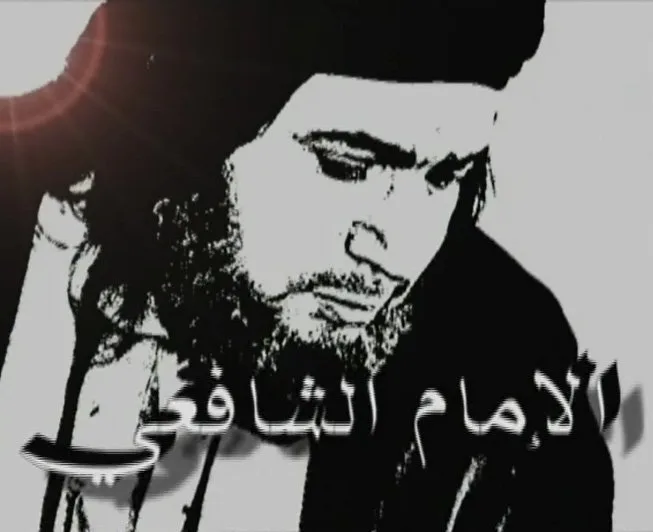
The work chronicles the biography of Imam Al-Shafi'i, the third of the four major imams, from his birth and the death of his father. He was Abu Abdullah Muhammad ibn Idris ibn al-Abbas ibn Uthman ibn Shafi' ibn al-Sa'ib ibn Ubayd ibn Abd ibn Yazid ibn Hashim ibn Abd al-Muttalib. The Imam—may God be pleased with him—began his life accompanied by orphanhood and poverty. His mother decided to take him to Mecca, relocating with him when he was a toddler under the age of two. Their living conditions were harsh, yet his mother honored his father's will and urged him to pursue knowledge. He memorized the Holy Quran as a young boy, then set out to master language, literature, and poetry until he excelled in them all. After his studies in Mecca, he moved to Medina and studied under Imam Malik ibn Anas, who was impressed by his intellect, powerful memory, and closeness to him. Al-Shafi'i—may God be pleased with him—possessed an eloquent tongue, sharp rhetoric, and authoritative mastery of Arabic and its grammar. He engaged with Arabic studies for twenty years alongside his natural eloquence, being an Arab by speech, origin, and era, and living for a period among the Banu Hudhayl, which profoundly shaped his fluency and command of linguistics, literature, and grammar, coupled with his continuous research and vast reading until he became a primary reference in language and grammar. He subsequently traveled to Iraq to acquire further knowledge, where he met Muhammad ibn al-Hasan al-Shaybani, the companion of Abu Hanifa, and studied Hanafi jurisprudence under him, debating him on numerous issues. These debates reached Caliph Harun al-Rashid, who was delighted by him. He also confronted fanaticism and extremism among certain Muslims, particularly a faction of staunch partisans of Imam Malik following the latter's passing—may God bless his soul. Afterward, Al-Shafi'i traveled to Egypt, where he met its scholars, exchanging knowledge with them. During this period, he became an independent imam with his own school of thought and distinct methodology. Finally, upon his death, Al-Shafi'i had continued to issue fatwas and teach in Egypt until he passed away—may God have mercy on him—in the year 204 AH.
- CategoriesDramaHistorical